Friday, 15 February 2019

Changing seasons


The corn from the garden has been harvested and used in the kitchen. This is a sign summer is over and it will be time to consider what to grow for early autumn.

As I continue to study the year of 1939 it makes sense a lot of their recipes are seasonal and the newspaper and magazine articles follow the changes of the season. The housewives would do the same in their homes depending on where they lived and what their local season was like. Almost everyone had a hot summer and the menus of the time suited the heat. Nobody wanted to be in the kitchen cooking in the heat which introduced many salads and request for cold cuts recipes.


The study of 1939 seems an odd place to start. The depression of 1930 was still in effect and war on Germany had not been declared yet. People were living comfortably for the most part and there was no talk of being careful with waste or watching the ‘pennies’. I choose this time to see how people lived in a mostly quieter time before the war and when the depression seemed to be lessening. It is still early in the year with this study. I haven’t fully implemented a lot of what I have researched. This is more a start to making changes towards living more vintage.


As the year moves on there is more planning now to grow as many vegetables as possible in the small space I do have. As I study more of gardening habits of the time I will also be looking at how to preserve the harvest. I’ve invested in a dehydrator and a waterbath canner. Next purchase for preserving the harvest is going to be a pressure canner. They did have both back then. The dehydrator they used the oven or had a drying screen which is something I’ll consider making as well.


This study isn’t about wearing the clothes of the time or looking like they did back then. I’m trying to remove the distractions of our modern era and make a more old fashioned life for myself. 

The small steps I am doing now may not look like much, in the end they will add up and help me live more like they did in the past. 


I hope everyone is having a good day or evening where ever you are.

Monday, 11 February 2019

Aubergine or Egg plant


The garden section from a newspaper article in early November of 1939 wrote: Those who like variety in their vegetables and home gardeners who like to grow uncommon vegetables should take an interest in growing the egg-plant or Aubergine. 

I took up the suggestion and planted out a couple of plants. This can be done by planting out seedlings, which I did. Or sowing direct in the open ground, three or four seeds to the site and afterwards thinning to one plant. The plant likes warm temperatures and the seeds germinate in hotter weather and flourish better when the weather is warmer. I planted my egg plants next to tomato plants as they are of the same family and require the same cultivation methods. The plants produce a lot of fruit and it is best to keep the crop to five or six per plant. Any garden work around the plant should be very shallow as the roots of the plant are at the surface and can be easily damaging to the plant. 

The above recipe for Aubergine tomatoes reads:
Wash large ripe tomatoes and cut in half cross wise. Melt 2 tablespoons butter or oil in skillet, place the tomatoes in the cut side up and sprinkle with the following seasonings, 2 cloves of farce finely minced, 2 teaspoons sugar, 1/2 teaspoon salt, 1/2 teaspoon pepper and finely minced (chopped) parsley. Cover and cook slowly for 10 minutes. Garnish with sprigs of parsley and serve immediately with any kind of fish (or meat) course.

Egg-plant fruits are ready for uses as soon as they reach a good size, and while they have a glossy appearance. If dull, they are over-mature and seedy, and not very good for cooking with. To prepare for cooking, simply wipe with damp cloth and remove stem and calyx. It can be peeled or left unpeeled. Egg plant is a watery vegetable; if cut into thick slices, salted, and covered with plate with weight on top, some of the excess moisture will drain away.
When frying egg plant do not cover the pan - slices should be crisp.

Cut unpeeled egg plant crosswise in thin slices. Coat light with seasoned flour, fry in hot butter until pale golden brown. Serve pipping hot as vegetable accompaniment with meat, fish, etc. 

For the right seasoning egg plant is best with: Basil, dill, garlic, marjoram, oregano, rosemary.


Growing the plant was no more difficult than growing tomatoes and I will keep adding the plant to my kitchen garden now I know how easy an egg plant is to grow and how versatile it can be in the kitchen.

Thank you to all who have left comments. I have read the replies but I just haven't had time to respond to them. 


I hope everyone is having a good day or evening where ever you are.


Thursday, 7 February 2019

Happy Road


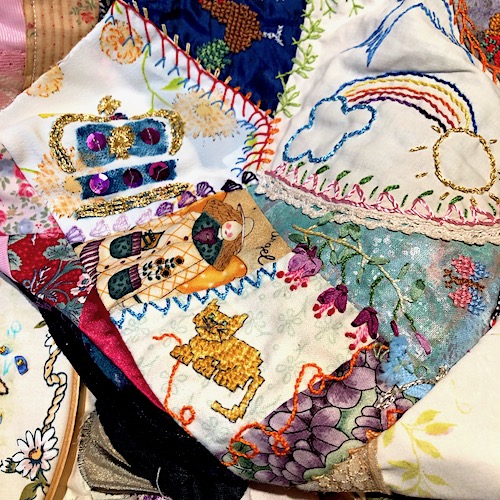
The 1939 lifestyle is moving into early February. The kitchen garden is slowly producing for the home with harvested vegetables and cut flowers from the cutting garden. The blooms don't have scent or not much scent but they are showy and remind me of the flowers seen in the embroidery of lazy daisy flower gardens with crinoline ladies and sunbonnet gals.

The newspaper articles continue to give advice for the kitchen garden and what should be planted for this time of year in Australia.


Living like it is 1939 and following the newspapers of the day is now a part of how I go about my daily home routine. I try to do a little of how they lived back then and keep to the old fashioned ways of the time even though the articles say how homes are now very 'modern' to help the housewife in her home making. 


The modern home of the 1939, especially the kitchen, allowed the homemaker more leisure time and the only thing that was considered missing was the dishwasher! Articles from the newspapers give plenty of leisure time instructions for crocheting, knitting, sewing, and embroidery. There is also a lot of advertising for movies to go to and radio programs to listen to. 


The 1939 lifestyle is really about slowing down. Taking time to place a tablecloth on the table and preparing dinners for the table. 


The older home economic skills gives a wealth of knowledge that is still usable today and is still used either as it was originally done or more updated to suit today. The methods are practical, sound advice, and makes sense to use them when possible. 


One of the practical methods was to follow a cleaning routine. It may take some time to pause and clean, or fold up items taken off the clothes line, or take out a dusting rag. But it really isn't any more time than scrolling through facebook or youtube. A few minutes of unplugging and slowing down to do the home chores is a step towards making a house a home and not just a place to live in.


For me, I'll continue down the road of learning what I can to unplug, slow down, and use ways which seem to make better sense to me.  I'm only just starting but now I'm down this road towards a more vintage life I feel this is the right way.


I hope everyone is having a good day or evening where ever you are.

Friday, 1 February 2019

Early February in 1939


A bad case of the flu meant a break in blogging posts. I also had to help with a family member who underwent a major surgery and that took up a lot of my time. It did mean falling off the 1939 living and going back to modern convineces of fast food. I'm now looking at using lunch boxes and making up meals for those times when I'm sick. After the flu hit I did go about and cleaned up the house, which was just as well because not soon after it was back and forth to the hospital for the family member who now is coming along fine after their surgery.


The February 1939 newspaper articles for the garden encourage mulching and staking up tomatoes, eggplants and dahlia's. And with the heat around there's advice to keep the watering up to the plants that need it.


I had my first harvest from the garden and I expect more to come in as the plants grow.


With summer in full swing and the heat soaring, many newspaper articles are giving out summer recipes or advertising meals useful for the heat. Arnott's Sao biscuits is advertised regularly and cordial drinks are popular. The cordial drink is probably not the healthiest but Cottee's is an old brand from the time of 1939.

I'm looking through a lot of advertisements now and trying to find many of the brand names used for the time. Some brands are still around today but the original recipe for them has changed like the SAO biscuits. Their's were much larger and I remember as a kid the SAO's were larger and thicker than what they are now. The packaging from 1939 was also very different, they had a packet that let you cut through the packet and you closed it back up to keep the contents fresh. 

I remember a while back SAO company trying to say they didn't change anything and the news found a lady who had a really, really, old packet stashed in her pantry she forgot about. Of course they compared the biscuit size and yes the company changed the size. 


I hope everyone is having a good day or evening where ever you are.


Saturday, 5 January 2019

Oh, for a cool change


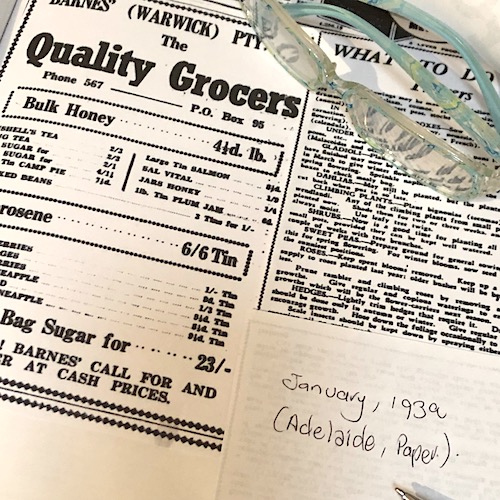
The articles for early January 1939 talk about the need to keep cool. Nothing much seems to change and the weather is still hot in 2019! The newspaper article for how to keep food fresh without an ice box is an interesting read. Depending on where you live refrigerators were advertised and many had them.


The garden for January 1939 talks about keeping up with the watering during hot days, and to plant out celery. Now a days gardeners don't bother with the trench method, they blanch the stems when they are almost fully grown by wrapping cardboard or newspaper around the plant to exclude the light to blanch the stem. Blanching the stem of celery will make the plant less bitter tasting.


I've planted my celery out. I left them a little too long in the seed planter but they will bounce back. It is important to keep the water up to the plant.


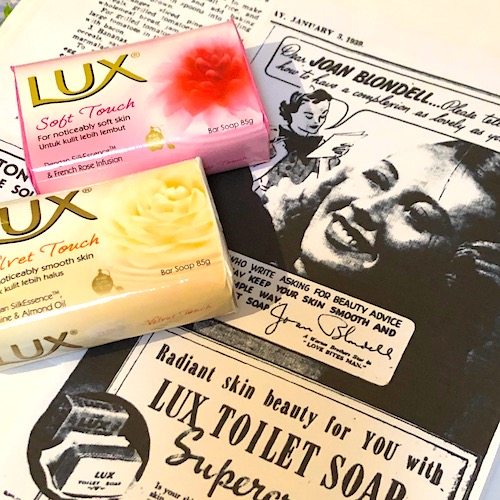
I'm going back to old fashioned bar soap this week, instead of using liquid soap. I've chosen to go with the Lux soap as the brand is advertised more than Palmolive soap. I wonder if I will end up with a complexion as: 'lovely as Joan Blondell!'


The scrapbook I have for the newspaper articles of the time is starting to fill up with a wide variety of home and garden sections. There's a lot of things I can't do with the articles I do have due to the obvious reason some items are no longer available or they are not something I want to do just yet. But I save what I find and it will be a good record to have on hand.

Don't get me wrong, I love vintage, but I also love our modern cons and technology. Without the latter, I wouldn't be able to research and save what I find. It would also mean long trips to the library. I think eating and living like our older generations once did makes sense in these times of uncertainty we seem to be in, but it is also wise to balance our technology with theirs too.


I hope everyone is having a good day or evening where ever you are.

Tuesday, 1 January 2019

The new year and 1939


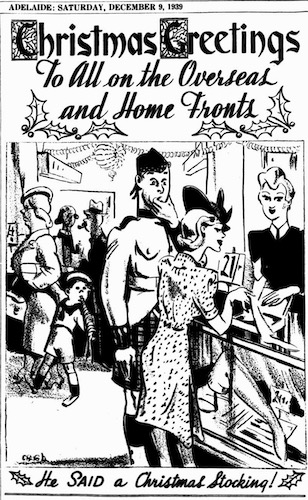
As the new year comes in for 2019, I'm heading back in time to 1939. Last year I did a lot of research and saved many of the articles I found for this time. This year will be putting much of what I found in the research into proper use as I only just touched on the subject towards the end of last year. Now it is a new year, I'll start with the articles from January. The article above is what housewives could buy for themselves in the summer sales after Christmas.  It is an interesting look in what was available to buy for the home at the time.


With Christmas over, the January articles give recipes for using up leftovers. We had traditional meat for Christmas this year and my favourite used a vintage recipe with pineapples and ham. I kept the ham bone to use it in a recipe for ham soup.


I'm continuing to build up the garden patch. I'm following the planting guides for 1939 and I have a few things planted out now. So far the heat, along with the wild storms we have had; hasn't done too much damage and everything is growing well. The growing guides encourage planting flowers, they obviously had seperate gardens for these. I have a small garden space so the flowers I have are mixed in with the veggies and in pots.


By following 1939 it means slowing down with home chores. They did have vacuum cleaners and washing machines but washing up was still done by hand in many homes. I now wash up by hand instead of using the dishwasher.


The meal time recipes for January call for salads and using up the salads available in the home garden. The recipes are obviously very seasonal for our hot weather. The main recipes are mostly for salad dressings and ways to add fruit to salads such as oranges.


In the beauty sections, soaps such as Lux and Palmolive show up in advertisements. Vaseline is encouraged for all uses and cold creams for skin care is being recommend, Ponds is advertised regularly. I have Nivea which was available at the time. Yardley isn't advertised until late in the year when war was announced and advertisements were encouraging to buy British. I received a bottle for Christmas and I will buy more as I like the scent which is Lilly of the Valley.

I think it will be an interesting year living during 1939 and recreating the home life ways of the time.  

For now, I wish everyone a Happy New Year. I hope the year will be happy and bright for you all.


I hope everyone is having a good day or evening where ever you are.


Friday, 21 December 2018

Peace on the home front


 The 1939 year continues as I prepare to move into the full new year next year. I've been following newspaper articles which writes about what they did back then on the day and month of that year. The garden section gives help on what to plant out now and what to do in the garden. I've started the garden following the instructions. They say after rain to weed then turn over the soil, so this week I've got out all of the grass growing along the fence line and turned over the soil ( the picture was before I got in and weeded).  For flowers, Zinnias and Dahlia's are recommended for planting at this time of year. I have those planted out because the articles say a cutting garden to brighten up the home is a must.  


The meal menu for the month of December has been very basic and costing little. Most of the meals are for salads. So far there's no talk in the articles about rationing and it is late December. They are telling homemakers to be wise about saving and are offering dishes 'At Small Cost'.  I found this recipe for Spaghetti Pie. The only difference I made was to throw in mixed diced vegetables of corn and peas. I also added in grated cheese between the layers. 

Spaghetti Pie:

Boil up spaghetti pasta until soft. Set aside to drain. Take chopped up onion and garlic, fry in small amount of butter. Add in diced mixed vegetables and cook until soft. In a buttered oven proof dish, place a layer of spaghetti on the bottom. Sliced tomato layer. Layer of diced mixed vegetables. Layer of cheese. Continue this until the dish is full. Add a layer of cheese and bread crumbs and dot pats of butter on top. Cook 180 for half an hour and then turn up to 250 (hot) to make sure the breadcrumb/cheese top is brown crunchy and cheese is well melted. 


I served up the Spaghetti Pie hot with steamed vegetables. It really is very nice served up cold as well with a salad the next day.


With Christmas around the corner the presents are getting wrapped. I've been adding in a few small homemade gifts as well. 


I use up the scraps of material I have. I had some lavender given to me during the middle of the year. I dried it so I'm now adding it to sachets. 


It's always useful to have a scented sachet in the drawers for moths and silverfish. Back then they were also needed for wardrobes. Older people I know who used to have free standing wardrobes always told me how the wardrobes stank which meant you had to air them out. A scented sachet would have been welcome to keep the inside of the cupboard smelling sweet. 


I hope everyone has a Happy Holiday, what ever it is you celebrate, and have a safe New Year. I wish to thank all for reading and commenting.  I will be back in the New Year, which will be the start of living like 1939. 

Friday, 14 December 2018

Floral Gingham Applique


The floral gingham appliqué pattern first appeared in a late 1938 newspaper. Even though I am looking at 1939 timeline, patterns from the year before are still something I can use in the time period.

The pattern it self is for needle turn appliqué as at the time the heart and bond we have today wasn't available. The best way to approach the needle turn appliqué with this type of design is to cut paper smaller than the material and then baste the fabric around the paper. Pin the pieces to the fabric base (tea towel) and then appliqué using very small slip stitches around the out side edge. The embroidery is done last.  For the embroidery I used DMC 310 Black using three strands through out.

If you haven't the time or patience for paper basting and needle appliqué, then use heat and bond. When doing this type of appliqué I like to use a heat n bond that is a lite (brand) which makes it suitable for embroidery. But if you don't want to mess around with reversing the pattern, go with the traditional needle turn appliqué.


The article had instructions at the bottom of the illustration which read: Those readers who wish to embroider tea towels will find this design most useful. The checks marked on the flowers indicate the checks of the  gingham. Any odd scraps may be used. Plain colours are also attractive and can be used with very good effects. A heavy thread is advisable for the working.  Breakfast cloths or luncheon mats look well decorated with this design.

I used the pattern on a yellow check tea towel and scraps from my stash. I also used a fade away pen to draw in the pattern for the embroidery design as a guideline for stitching.


I hope every one is having a good day or evening where ever you are.

Friday, 7 December 2018

Summer and December


December has come in and so has the heat. With the start of December, I began to follow up with the 1939 era at home. The newspapers of the day have a couple of sections devoted to the kitchen and garden. There's also a few coloums for the home with handy hints. When December started I began a  small kitchen garden. This type of garden will become known as the Victory garden as the war comes in. For this month, the kitchen garden gave advice to plant out vegetables for your plot. 

I planted out corn, cucumber, lettuce, tomatoes, and beets. I'm not a very good gardener but I try. I know with the hot weather about I'll have to get in and mulch this. For now I have the recommenced 1939  December vegetable crops out. I also planted out dahlias, zinnias, and petunias as suggested.


The lettuce and strawberries here, were later changed as I had them in too much hot sun with not enough shade. They are now in a cooler part of the yard. I had a first strawberry the other day.


Fried Bananas may seem like an odd recipe, but it has been around as early as the late 1920's. The recipe picked up interested again in the late '30's and later during the war. Britain, of course, once the war started didn't see bananas the British government requisitioned Banana boats for military service. Here in Australia we grew bananas and the shops where selling them through the war. 


It's a simple enough recipe and one which can be fried up with bacon. I fried mine up with tomato and onion. This is one of those recipes meant to use up kitchen food that is over ripe which was why it was popular during the war. 

 If fried banana for your breakfast or tea isn't your thing, you can always use up ripe banana's in a banana cake or banana muffins recipe.


I hope everyone is having a good day or evening where ever you are.