Sunday, 29 July 2018

Cut Flowers -1939 cut flower hints for keeping winter flowers


It is well known flowers are at their best on show in the garden, but when cut and placed in vases; their show fades with dropping petals or wilting stems. For flowers that drop their petals the best remedy is to sweep them up as they fall, flowers such as Larkspur is an example whose petals drop rapidly.  In many other cases a few simple precautions taken when picking the flowers will help prolong the life of the average cut flower.

Shrubs and hard-wooded plants, such as roses, and lilacs, should have one to two inches of their stems smashed by a hammer so that the water may be sucked up through the stems to help preserve the blooms longer. Another method of skinning the stems of their bark is useful but not as good as smashing the stems. 

Flowers such as Dahlia, Poppy, and others, have sap which evaporates fast when cut, they will remain fresh if the stems are singed with a candle flame for a few minutes after cutting. If this hint is followed, it is known that poppies, if picked in the bud, will open and remain in blood for three or four days.

A lesser known fact about cut flowers is that yellow and white flowers last a lot longer in water than those which are red.


Some more hints from the 1939 to make cut flowers last longer:

When cutting, be sure to use a special cutting shears, or a sharp knife, and cut at a slant to get the largest absorbing areas. This also prevents the stem from lying flat on the base of the bowl, blocking absorption.

Stand cut flowers in a bucket of water, right to the flower heads, in a cool, draught-free room. Never leave the foliage in the water when arranged, as they decay and will pollute the water.


Cut winter flowers:

Anemones - Add half cup vinegar to two cups of water.
Aquilegias - Five drops of peppermint oil to one pint of water.
Carnations - Cool water up to the flower heads. Do not submerge blossoms.
Daffodils - All like small quantities of water. Arrange in no more than one inch of water.
Delphiniums - One tablespoon alcohol to one pint of water.
Violets and Violas - Bunch. Submerge for two hours after picking, then place in container filled with iced water.
Tulips - Roll in wet newspaper to keep the stems straight. Place in cold water up to flower heads.
Forget-me-nots - Plunge into hot then cold water - add eight drops for alcohol to one pine of water.
Sweet Peas - As for forget-me-nots.
Gypsophila - One teaspoon of alcohol to one pint of water.
Iris - Three drops of peppermint oil to one quart of water.
Larkspur - One tablespoon alcohol to one pint of water.
Poinsettias - Burn ends of stems - one handful of rock salt to two quarts of water.
Lilies - One cup of vinegar to two quarts of water.
Hyacinths - Squeeze substance from end of stems immediately after picking. Plunge into very cold water.

Lilacs - Never pull the green leaf off near the flower head, as it is the water-conductor to the bloom.


I hope everyone is having a good day or evening where ever you are.

Saturday, 14 July 2018

Dianthus - Pinks


Old-fashioned garden pinks were the first choice for perfume for many cottage garden lovers. John Parkinson, a 17th-centruy author of the first illustrated book on ornamental plants, could hardly find the words to express his admiration:

"What shall I say to the Queen of delight and of flowers, Carnations and Gillyflowers, whose bravery, variety and sweet smell, tyeth every one’s affection?”

Gillyflower is the old name for members of the Dianthus family, driven from the French giro flier - a clove tree. Many of the old-fashioned pinks were clove scented, the famous ‘sops-in-wine’ variety, which has single, maroon flowers with white markings, was grown around taverns and alehouses so that the petals could be used to flavour the liquor.

Pinks are still the favourites of most cottage gardeners, and few plants have their qualities of ‘bravery’ (hardiness), compactness, perfume, and show of pretty flowers from early to midsummer. Set out new plants in spring, 12 in (30cm) apart, and water them well. Pinks like a sunny position in well-drained soil, and will benefit rom a top dressing of gravel to prevent the bases of the plants from coming into contact with damp soil. You can take cuttings after the flowers have finished - choose strong shoots and cut them off close to the main stem. In late summer, remove the old flower stems and apply a high-potash fertiliser.


A traditional recipe for Pinks potpourri:

1 cup rose petals
1/2 cup petals from pinks
1/4 cup each of marjoram and rosemary leaves
1 teaspoon ground cloves. 
Mix thoroughly and place in china bowls or specially made potpourri containers.  


I hope everyone is having a good day or evening where ever you are.

Monday, 2 July 2018

Laundry - 1939


In a late 1938 an article on doing laundry appeared in a newspaper article. Even though it is a year earlier than 1939 some of the advice is still useful for the following year and even in today’s modern world.

The article begins with telling the wise housewife that all fabric vary and must be washed to the fabric standards. It goes on to then say the start of the laundry is to begin by sorting the clothes into various piles. Colour and fabric are to be taken in consideration then that is followed with sorting the very soiled garments from the not so soiled garments. The article recommends not washing very dirty items with the not so dirty items.


Once the items are sorted, the article then says to look out for items of clothing the need mending and to do the repairs before laundering. This is recommended because any small holes obviously can tear into bigger holes during the washing. 


The following list of how to do the laundry continues in the article:

- The main rules to remember are to keep white and coloured clothes separate.
-Finer delicates should be washed separately and carefully.
- Soaking clothes is next to sorting. But use soaking in moderation. Woollens and silks should never be soaked.
-Next is rising. Which should be done in clean water until every scrap of soap is rinsed out. 
- Add Blue in the last rinsing water for white clothes.

The article also then goes on to say to take advantage of warmer weather. A clear, sunny day with a good breeze is ideal for blankets and curtains. Blankets should be washed early on a fine windy day. Blankets should not be washed for too long to prevent shrink.  The blankets should always be squeezed, not wrung.

To hang blankets, fold them in half, and peg the two edges a few inches over a taunt clothes line. Shake and turn during drying. 


On small clothing items:
The article says to use bran water - Make it by using half a pint of bran to two quarts water. Put in a pan, heat to boiling point, and simmer for half an hour. Strain, and use both for washing and rinsing. Bran water is used when it’s uncertain about the colour fastness of the item.

The article then goes on to give advice about how to wash gloves and stockings.

It’s an interesting article while dated in some aspects it has good advice in others. 


I hope everyone is having a good day or evening where ever you are.


Thursday, 28 June 2018

Calendulas! - But in Grandmother’s Day They Were Called Marigolds


During the old times basic remedies from the petals have made women beautiful, but the flower now makes a fashionable inexpensive floral decoration. With the advent of homesteading and the back to simple living movement, the old time calendula has been experiencing a tremendous boom. So whether you really like it, or not, knowing about calendulas is useful knowledge not only for using it as decoration but as a helpful medicinal herb in it's own right.


In the past grandmothers had a prettier name for them in Mary’s Gold, or marigold. The quilled petals of the calendula reminded our grandparents of the likeness of Mary with her halo and ‘rays of glory’ which gives the name Marigold.

“The marigold that goes to bed with the sun, and with him rises, weeping…” - Shakespeare

In times past the flower was a favourite and was much used by housewives and the old ‘simplers' (herbalist), and to-day many are making concoctions from the garden Calendula for beauty just as they did in days of old.


Calendulas are good for cutting. One of the disadvantages about the calendula as a cut flower is the strong odour of the stems when stood in water. Every day the water should be changed, and the stems cut down just a little. If the stems are left in the water it makes the water cloudy and unpleasant. Treating the stems also helps keep the flowers to last longer. Bits of old leaves should also be cut off. Don’t pull the leaf off as that encourages the stem to ‘bleed’ or weep where it is tore. 


Calendulas have a long flowering season and the plants are strong and hardy making them an excellent cut flower, and one that should be used for decoration under artificial light as it is a showy bloom which brightens up any corner of the room.


I hope everyone is having a good day or evening where ever you are.


Tuesday, 26 June 2018

Hankies for gifts -1939


I found this handkerchief edging in a November 1939 Australian women's magazine. It seems a bit complicated but the pattern is doable for someone like me with little experience in crochet. I tried doing the edging when I had a flu and there was a couple of attempts to figure out the pattern. I'm not really sure if I managed to get the pattern right but the finished edge looks nice enough. 

The finished handkerchief was teamed up with a hand painted greeting card and I used the greeting card painting as an embroidery on the handkerchief. For the embroidery I used the ever popular crayon tinting technique that was popular in the '30's for the embroidery.


(Note: The crochet stitches are English/Australian. American crochet stitches are different. I have a chart on my blog in an old post to translate stitches: Here)

Use fine handkerchiefs with a narrow hem and work over the hem into actual holes of hemstitch.

Abbreviations: Ch, chain; dc, double crochet; tr, treble; pic, picot ( 3 ch, 1 dc back into first) spl, single pic loop (2ch, pic, 2 ch, pic); H, hole of hemstitching. If plain linen be used, roll edge and close dc all round, then call every dc an h.

Double picot Edge:
1st row: 1 dc into any h, * 3 ch, miss 1h, 1 tr, 3 ch, 1 tr into next; miss 1 h, 1 tr, 3 ch, 1 tr into next; 3 ch, miss 1 h, 1 dc into next; 5 ch, miss 1 h, 1 dc into next, Repeat from * all round.

2nd Row: 1 dc into 5 ch loop, * 3 ch, 1 tr, 1 spl, 1 tr into 3 ch between first pair of tr; 1 tr, 1 spl, 1 tr into next 3 ch between next pair of tr; 3ch, 1 dc into 5 ch loop repeat from * all round. 

I hope everyone is having a good day or evening where ever you are.


Sunday, 24 June 2018

Cottage Journal - Winter and flu season


I took an unintentional blogging break due to getting a bad case of the flu. With winter arriving, it is of course, the season for flu's. It didn't help we had some icy weather after really nice winter days that were much milder. With my recovery I'll be back blogging again.

Blogger also has changed the way it collects information so they are now including the use of cookies. It is likely visitors to my blog will see a pop up to agree to collect cookies.


My study for 1939 is continuing. I'm now saving newspaper and magazine clippings into a scrapbook. There's just about mostly everything that could be useful for a 1939 home now collected into sections of the scrapbook. The articles cover the kitchen, the garden, other parts of the home, and beauty.  Reading the articles have been very interesting and it is true what they say about there being nothing new under the sun, a lot of the articles are really relevant for today's home and have been written about today.  

In the front pages of the current 1939 newspapers there are articles about the problems with Germany and Japan. War is lurking around the corner!


 I hope everyone is having a good day or evening where ever you are.

Sunday, 20 May 2018

You say tomato - 1939


In 1939 an Australian woman’s magazine recommend tomatoes have a place on every Australian table. The article cited the high vitamin contents of tomatoes as one of the reasons to keep serving tomatoes. And, as they were easily prepared or quickly cooked the busy housewife, it said, would appreciate serving tomatoes for a meal.

Tomato soup is perhaps one of the easiest to prepare. Very ripe tomatoes, or a can of peeled tomatoes, can be use. I used a can of peeled tomatoes because that was already in the pantry.


If you don't want the skin on the tomatoes cut a cross in the top of them and in a dish pour boiling hot water over them, this will split the skin and it will peel away easily.


Tomato Soup - A can of tomatoes, 1 large onion, 1 garlic clove, bunch of parsley, pinch of thyme and sliced basil leaves for garnish. 

Melt butter, add in garlic clove, lightly cook onion until transparent. Add in the can of tomatoes, chop them down in the pan. Add in herbs and bring to boil. I used a whisked and whisked the soup you can also use a stick blender to break it down. At this point you can add tablespoon of flour and bring to boil, add a cup of milk, then boil again. I didn’t do this but I added grated cheese through the soup and used cheese to garnish. 

I saved up with grated cheese garnished basil and homemade Damper bread.

Serve hot. 

I hope everyone is having a good day or evening where ever you are.

Friday, 11 May 2018

With Fond Regards - 1939


It's 1939 and I'm looking at greeting cards. Christmas greeting cards were perhaps the most popular. During this time there were a lot of massed produced cards available and often sold in boxed sets. However, a lot of articles were still written in publications describing how to make your own greeting cards.


In this day and age we take electronic-mail for granted but exhibits back in 1939 was also sending voice mail too.


Today, it's easy to reproduce a photo and have it printed on a card and it may seem a modern idea, but  there were articles to show you helpful guidelines to prepare your photos for greeting cards.


I hope everyone is having a good day or evening where ever you are.


Monday, 7 May 2018

Bay Leaf


Bay Leaf
(Laurus nobilis)

Sweet bay

Parts Used:
Leaves

Properties:
Aromatic, Culinary flavouring.


The sweet bay is the true laurel of ancient Greece. Its leaves were used to make crowns for triumphant heroes, distinguished poets and victors of the Pythian games at Delphi. The title, Poet Laureate, comes from this use.

In Greek myth, Apollo was pursuing a mountain nymph named Daphne. The gods changed her into a laurel tree to escape him. Apollo consoled himself by weaving a garland from ‘her’ branches and, after this, the tree was held sacred by Apollo.


Cultivating: The Laurus nobilis needs special care in frost areas. It is not a hardy plant for the out-of-doors, but it adds a great deal of charm to an herb garden and will grow well as a tub plant if great care is given it.

The potting mixture must be prepared with 2 parts loam, 2 parts sand, 2 parts peat moss and fertiliser, preferably cow manure.

It prefers a sunny spot and the soil should be kept moist at all times. When frost threatens, the plant should be placed in a protected area.


Harvesting: Like most herbs, bay leaves should be picked in the early morning when they are clean and still fresh from the morning dew but not wet. Place leaves to dry gradually in warm shady spot. When dry but not brittle, arrange the leaves and weight them to flatten them so they do not curl. When completely dried and pressed, pack carefully in tightly covered opaque containers until needed. 


Uses Of The Herb:
Culinary:
Use bay leaves as part of a bouquet garni for soups, stews, and sauces. Add to stocks, marinades and stews, curry, and poached fish. Remove leaves before serving. Place in rice jar to flavour rice. Heat in milk to flavour custards and puddings. Use to flavour vinegar.

Medicinal:
Use an infusion of the leaves as a digestive stimulant. Apply infusion to scalp to relieve dandruff. Essential oil is good for massaging sprains and rheumatic pains. Make sure the oil is diluted by mixing it with a ‘carrier oil; such as sweet almond beforehand.

Cosmetic:
Add a decoction of bay to bath water to tone the skin and relieve aches.

Decorative:
Clipped and trains day trees in tubs are an elegant and traditional decoration for doorways and walls. Use branches in full leaf for wreaths.

Household:

Crumble dried leaves into potpourri. Hang branches up to freshen the air.

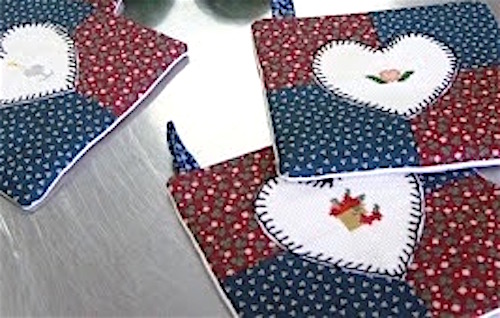
To make spiced scented coasters:


Bay leaves  
Cinnamon sticks
Star anise
Cloves

Crush six bay leaves, a couple of cinnamon sticks, some cloves, and star anise with pestle and mortar.
This scented spice mix then can be placed between squares of fabric and sewn in.  The aroma of the crushed spices is released when a warm tea cup or coffee mug is placed on the coasters.

A larger mat can also be made to rest a tea pot on or a hot pan.

(Disclaimer: As always be careful about using herbs. Consult your doctor before use. Never use on small children or pregnant women)


I hope everyone is having a good day or evening where ever you are.

Wednesday, 2 May 2018

The Worker Housewife: 1939


In a 1939 Australian newspaper article I found some helpful hints and recipes for the 'Worker Housewife'. It wasn't uncommon for women to be in the workforce at the time. When money was hard to come buy because of the Great Depression, women, were doing what they could to help with the house hold budget. Of course, when 1940 came and the war started, women were a needed force in the workplace. 


It's interesting to note how this recipe uses a lot of eggs and heavy with margarine. 
I don't think many today would think of an omelette meal as a dinner meal or to 'serve friends' when they drop by, but it's a good meal to keep in mind.


I didn't have any kidney meat, but I had some left over chicken. I used the chicken instead and also added in a handful of cheese as well as chopped up tomato. I fried up left over bread starting to go stale to go with the omelette so as not to waste. 
I've had kidney before but not sure about doing it in an omelette. Something I'll try next time when the shopping order is due and I'll add kidney to the meat list.


I hope everyone is having  a good day or evening where ever you are.

Sunday, 29 April 2018

Make Vaseline Your Friend - 1939


Vaseline was a favourite for use on the skin during 1939. It had previously been used as late as 1876 and afterwards when it reached popularity the product began to be used for a variety of uses. One useful hint in an article from 1918 suggested: Mildew on leather may be removed by rubbing the affected part with vaseline. 


By 1939, vaseline became part of cosmetic use and for medicinal uses in the same way we use Aloe Vera for burns, scratches, and blemishes. 


What would home be without vaseline? And yet, how many users of vaseline know anything about it’s origin?

On Saturday 8 August, 1934; the inventor of vaseline, Robert Chesebrough, died at the ripe age of ninety six. He was born in London, and spent many years experimenting with the by-product of petroleum before he hit upon the jelly for which he was sure there was a world-wide need for it’s use. Vaseline is a product of Petroleum, from which it is obtained by a system of filtration. It has no taste or smell and has a softness and smoothness making it ideal for using on the skin.


However, neither the public nor the medical professions were convinced they needed any enthusiasm to use the new product. Chesebrough had to fight hard to bring the product into daily use and the turning point came in 1876, when a famous medical journal drew attention to the medicinal value of the jelly, the article suggested it should be given a careful trial. Chesebrough was also a pioneer in the field of advertising, and during electioneering campaigns in the old days he brought up space on election posters, which brought the merits of vaseline before the eyes of thousands of families who never opened a paper. Vaseline became widely accepted and he died a millionaire and one of New Yorks’ largest landowners. Robert Chesebrough, believe in his product so much he ate a spoonful of it every day until his death at the age of 96.


I hope everyone is having a good day or evening where ever you are.

Friday, 27 April 2018

Cottage Journal - 1939


And we are off - Vintage living 1939

I’m heading off to 1939 and a return to ‘vintage living’. I’ve decided to start in this timeline as it is just before the war was announced by Australian Prime Minister Sir Robert G. Menzies in his wartime broadcast and while the Great Depression of the 1930’s was still in effect. Many believe the advent of World War II ended the Great Depression, or at least accelerated the recovery. Still, the era was a time of living where a lot of people were ‘making do’ with what they had and would continue that kind of lifestyle when war with Germany was announced on September 3rd, in the next year of 1940.


Rations were not in effect yet, but items were hard to come by because of the Great Depression.  The value of saving every penny was at the forethought of the Australian homemaker. 


There were still luxuries to be brought. Movie theatres were a popular past time, embroidery, knitting, crochet, and quilting were all in favour as a pastime hobby. 

My mums older sister born in the 40's

Cosmetics was often sold, items such as face powder and lipstick being the most popular; followed by nail polish. Perfumes and soaps were still available and Yardley was advertised in many popular women’s magazines at the time. Lavender was a favourite scent. 


In the kitchen, homemakers were buying luxury cut meats, before the war meant rations to buy cheaper cuts. Vegetables were a main part of the meal. Here too, the homemaker was making sure to save what they could on rising costs and availability. Homes in Australia at this time had the veggie garden out the back and the chook pen to cut down expenditure on the household budget.


The home of 1939 was modern in appearance and there was electricity, fridges, washing machines, fans, and radios in use at the time. Many brought into the ‘buy now, pay later’ plans available. A lot of homes in Australia had the wood stove in the kitchen as well. Not all homes had these items and often women still used the old copper in the laundry before the new washing machines came into use.

My return to the year of 1939 will be a start looking at how the homemaker lived and what they did in their leisure time. It’s a vintage life for me but then I’ve been doing it all along. The garden posts will continue so will the home scents of potpourri and such.


I hope everyone is having a good day or evening where ever you are.